Proudly serving Tuscaloosa
Siding Repair Tuscaloosa
- Built for Alabama storms
- Serving Tuscaloosa County
- Upfront, no-surprise pricing
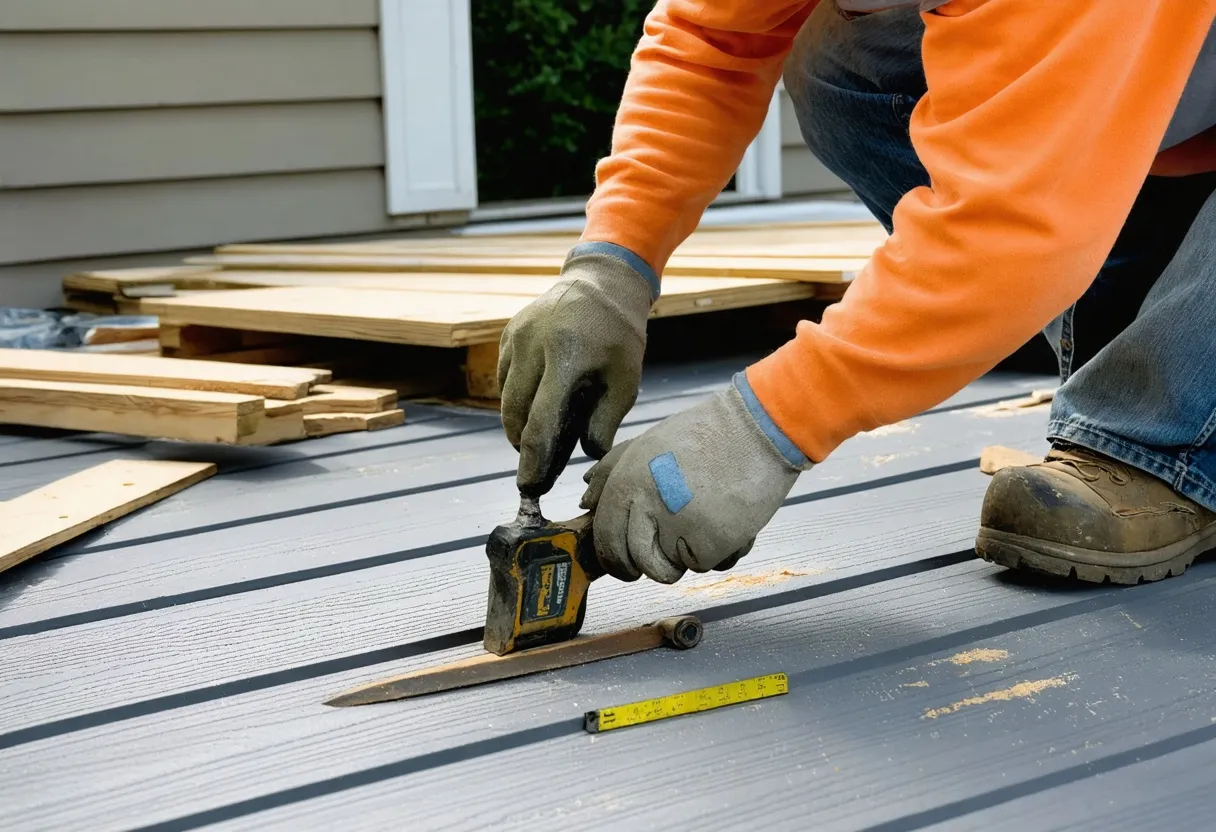
Tuscaloosa County sits inside what meteorologists call a tornado corridor, and that changes what a good siding repair actually needs to accomplish. A patch that just covers a hole isn't enough here — wind doesn't just tear siding, it gets underneath it, lifts panels from the bottom edge, and works loose fasteners until the next storm finishes the job. A repair that ignores how wind actually attacks a wall is a repair you'll be paying for again after the next squall line moves through West Alabama.
This page is about siding repair specifically — cracked panels, punched-through holes, failed seams, storm-lifted sections — priced in plain, itemized numbers before any panel comes off your wall. We'll walk through how wind damage actually happens, what to check before deciding between a patch and a full replacement, how the repair itself gets done, and what genuinely moves your price up or down. No vague lump-sum estimate, no surprise line item once the crew is already on your roofline.
What Makes a Repair 'Wind-Aware' in Tuscaloosa County
Most siding failure in this part of Alabama doesn't start with a direct hit. It starts with wind getting under a panel edge that was fastened a little loose, or a seam where caulking had already started to fail from a few summers of heat-cycling. Once wind gets a grip under one panel, it doesn't stop at that panel — it works laterally, popping the interlock on neighboring sections and stressing fasteners several feet beyond the point of obvious damage. That's why a repair limited strictly to the panel you can see cracked or missing often leaves the wall vulnerable to the next system that rolls through.
A wind-aware repair treats the visible damage as the starting point of the inspection, not the whole of it. That means checking fastener tightness and panel lock on the courses immediately above, below, and beside the damaged section — not just the one piece that failed. It means re-securing panels to correct nailing clearance rather than driving fasteners tight against vinyl, which removes the panel's ability to expand and contract and sets up the next crack. And on fiber cement, it means confirming joint flashing and caulking are intact along the whole run, since fiber cement doesn't flex the way vinyl does and relies more heavily on properly sealed joints to shed wind-driven rain.
Hail and debris impacts get the same broader look. A baseball-sized hole from a wind-thrown branch is the visible problem, but the surrounding panels have usually absorbed some of that same impact energy. We check for hairline cracking radiating from the point of impact before deciding how far the repair needs to extend, rather than patching the hole and leaving stressed panels next to it that crack out on their own within a season.
Signs You Need a Siding Repair Call in Tuscaloosa
How a Wind-Aware Repair Visit Works
We check the panels and fasteners surrounding the visible failure, not just the section that's obviously cracked or missing, since wind stress usually extends further than it appears.
Where the panel comes off, we check house wrap, flashing, and sheathing condition before closing anything back up, since a repair over hidden rot fails again fast.
You get a line-by-line number for materials, labor, disposal, and any flashing or sheathing work before a single fastener is pulled, with any change flagged before we proceed, not after.
Replacement material is matched to profile and color where available, and installed with correct nailing clearance for vinyl or proper joint treatment for fiber cement, so the fix moves and seals the way the original panel was designed to.
We confirm the invoice matches the quote plus anything you approved along the way, and flag any other spot on the exterior worth watching before the next storm season.
Repairing Vinyl, Fiber Cement, Wood, and Metal Siding
Vinyl
Vinyl is the most common material we repair around Tuscaloosa, and it's generally the most straightforward — panels interlock, so a damaged section can often be swapped without touching the rest of the wall, as long as a matching profile and color are available. The tricky part is sun-faded older vinyl, where an exact color match isn't always possible; we'll tell you upfront if that's the case rather than installing a mismatched patch and hoping you don't notice.
Fiber Cement (James Hardie and Cedar Ridge)
Fiber cement repair takes more time than vinyl. It has to be cut with the correct blades and dust controls, cut edges need to be primed and sealed to match the factory finish, and joint caulking has to be redone correctly since fiber cement relies on sealed joints rather than flexible panel movement to keep water out. Done right, though, a fiber cement repair holds up to wind and moisture as well as the original installation did — which is part of why it's increasingly specified on Tuscaloosa homes that have already been through a storm cycle or two.
Wood
Wood siding repair is rarely just about the piece that's visibly damaged. Humidity here accelerates rot around any crack, gap, or old fastener hole faster than in drier climates, so every wood repair includes checking the boards immediately around the damage for softness before deciding how much needs to come off the wall.
Metal
Aluminum and steel siding shows up less often but does appear on some Tuscaloosa properties. It resists rot and insects completely, but a dent doesn't pop back into shape the way vinyl can flex — metal repairs are almost always a panel swap rather than a patch, since a dented section can't be reshaped invisibly.
You'll See the Number Before You See a Panel Come Off
Every repair quote is itemized by material, labor, and disposal before work begins, and any hidden damage we find behind the wall gets flagged as a separate line — not folded into a surprise invoice once the crew is already on-site.
Siding Repair Questions Tuscaloosa Homeowners Ask
How is siding hole repair different from a full panel patch?
A hole repair seals a single puncture — from hail, debris, or an old mounting bracket — and re-establishes the water barrier behind it, while a patch repair swaps out a full damaged section or run of panels. Which one applies depends on how far the damage extends once we check the surrounding area, not just the size of the opening itself.
Do you check for water damage that I can't see?
Yes, every repair includes checking behind the damaged panel for staining, softness, or existing moisture in the sheathing before we close it back up. Given how much humidity and rainfall Tuscaloosa gets, skipping that step is how a small hole turns into a bigger repair a year later.
Can a cracked panel really wait, or does it need to be fixed right away?
A crack widens with every heat cycle and lets water track behind the wall the whole time it sits open, so a two-inch crack in spring is often much longer by the following summer. It's rarely an emergency, but it's also not something worth letting ride through another storm season.
Will you handle the waterproofing side of a hole or seam repair, not just the cosmetic patch?
Yes — sealing penetrations, re-establishing panel overlap, and checking house wrap and flashing are part of every hole and seam repair we do. For a deeper look at how we approach moisture management specifically, see our siding waterproofing page.
Do you handle permits for repair work in Tuscaloosa County?
For repair scopes that require it, yes. Permit requirements vary depending on the extent of the work and whether the property sits inside city limits or elsewhere in Tuscaloosa County, and we account for that in your itemized quote rather than leaving it for you to sort out separately.
What if the damage turns out to be bigger than a repair can fix?
We'll tell you plainly if a wall has moved past the point where a patch makes sense — usually multiple elevations affected, rot behind several panels, or siding old enough that a patch would visibly mismatch. In that case we'll point you to full siding replacement rather than patching something that won't hold.
Repair Coverage Across Tuscaloosa, Northport, Cottondale, and North River
We repair siding throughout Tuscaloosa and the surrounding communities of Tuscaloosa County, including Northport, Cottondale, and out toward North River. The same wind-aware inspection and itemized pricing apply whether your property sits inside city limits or further out in the county — and since permit requirements can differ depending on jurisdiction, we build any applicable code work into your quote rather than treating city and county jobs identically.
If you're not sure whether what you're looking at is a repair or something bigger, the fastest way to find out is an inspection — we'll tell you honestly which category your wall falls into, and give you an itemized number for whichever one it turns out to be.
Get Your Free Quote
Tell us about your home and we'll follow up with clear pricing and options.
Ready to Talk Siding?
Reach out for a free, no-obligation quote on your project.