Proudly serving Tuscaloosa
Siding Installation Cottondale Al in Tuscaloosa
- Built for Alabama storms
- Serving Tuscaloosa County
- Upfront, no-surprise pricing
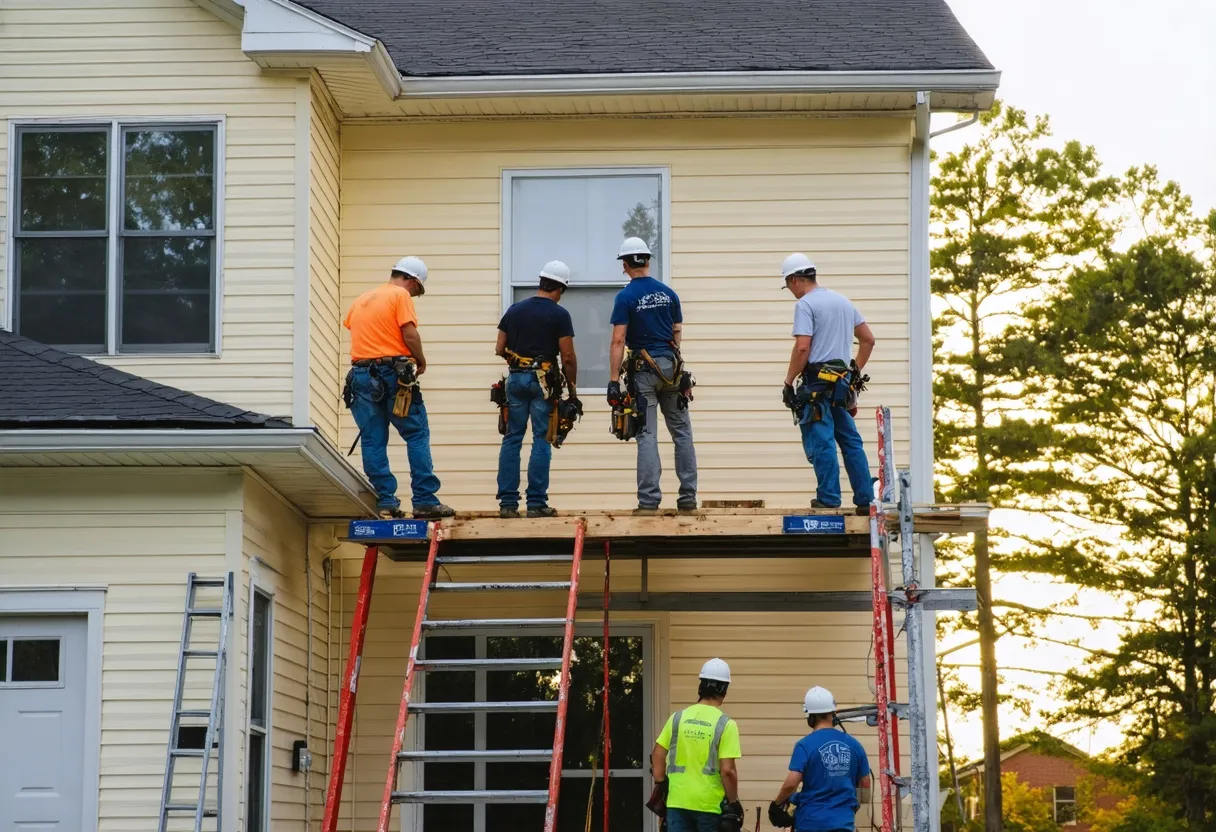
If you're gathering quotes for siding installation in Cottondale, AL, the real comparison isn't which crew quotes the lowest number — it's which contractor treats siding as a wind-rated building system versus a cosmetic wrap. Cottondale sits inside a stretch of Tuscaloosa County that deals with the full range of Alabama severe weather every year: long humid summers, hail-producing thunderstorms, straight-line wind events, and the tornado exposure West Alabama is well known for. Siding installed to a generic national spec sheet can look correct in a showroom photo and still fail at the fastening points the first time a real wind event pushes on the wall.
This page is written specifically for homeowners weighing siding installation in Cottondale, not a citywide Tuscaloosa page with the town name swapped in. It covers how wind exposure and humidity change actual installation decisions here, what belongs in an itemized quote versus a vague lump-sum estimate, how the common siding materials compare for storm performance, and the documented, photographed process we follow so you can verify the parts of the job that disappear behind the panels once it's finished.
Why Cottondale's Wind Corridor Changes How Siding Should Be Installed
Cottondale is close enough to the river and open enough in parts to catch straight-line wind gusts that a more sheltered in-town lot might not see, and it sits inside a county-wide tornado risk zone that shapes how exterior work should be engineered, not just how it should look. Two houses with identical siding products can perform completely differently in a storm if one was installed to manufacturer minimums and the other was installed to actually resist the wind loads this area produces.
Wind-Driven Rain Behind the Panel
Most siding failures we get called out for after a storm aren't the panel itself splitting — they're water that got behind the panel through a poorly lapped or torn water-resistive barrier, then had nowhere to go. Wind-driven rain doesn't fall straight down; in a gusting thunderstorm it gets pushed sideways and upward under laps and around trim. A correctly sealed, correctly overlapped barrier underneath the visible siding is the single biggest factor in whether a Cottondale home stays dry through a severe storm, and it's also the part of the job a homeowner has no way to verify once the new panels are up unless the contractor documents it.
Humidity Swings and Material Movement
Tuscaloosa County humidity doesn't stay steady — it swings from saturated summer air to drier winter cold snaps, and every siding material expands and contracts with those swings. Vinyl and fiber cement both need expansion clearance and a specific fastening pattern that lets the panel move without buckling, cracking at the nail line, or pulling loose. Fastening panels too tight, which is a common shortcut on rushed jobs, is one of the most common reasons siding that looked fine at installation starts buckling or gapping within a couple of seasons in this climate.
Local Permit Codes Aren't Optional Paperwork
Tuscaloosa County jurisdictions enforce specific requirements around exterior cladding, fastening schedules, and weather-barrier detailing, and scope that touches sheathing or the water-resistive barrier can require a permit. Skipping that step doesn't just risk a fine — it can complicate an insurance claim after storm damage or create problems at resale when a buyer's inspector flags unpermitted exterior work. A contractor working regularly in Cottondale and the surrounding Tuscaloosa County service area should be handling this as a matter of course, not treating it as an upsell.
Our Documented Process for a Cottondale Siding Installation
We inspect the current exterior, check for existing moisture or pest damage behind the siding, and factor in your lot's specific wind exposure before recommending a material or fastening approach.
You get a line-item quote covering material, labor, tear-off, permitting where required, and any add-ons you want bundled in, not a single lump number.
Old siding comes off and we photograph the sheathing underneath before any repair or new material goes on, so you can see the condition we're building on rather than take our word for it.
The water-resistive barrier is lapped, sealed, and photographed before panels go up, then siding is fastened to a schedule matched to this area's wind exposure rather than manufacturer minimums alone.
We walk the finished project with you, point out the detailing at corners, trim, and penetrations, and leave you with a photo record of the parts of the job that are no longer visible.
What Should Be Included in an Upfront Cottondale Siding Quote
Vinyl, Fiber Cement, or Metal: Which Holds Up Best in Cottondale
There's no single best siding material for every home — there's a best material for your budget, your home's exposure, and how much upkeep you're willing to do. Here's how the main options stack up specifically against Cottondale's storm and humidity pattern; for a full side-by-side breakdown of every product line we install, see our siding materials comparison page.
Vinyl
Vinyl is the most common siding choice in this market because it resists Tuscaloosa County's humidity without rotting or feeding insects, and insulated profiles add a foam backing that helps with energy efficiency and adds some rigidity against wind pressure. Quality matters more than the category here — a thin, budget-grade vinyl panel is far more prone to cracking under hail or tearing loose in a wind event than a heavier-gauge, correctly fastened panel. We cover the full range of vinyl profiles and insulated options on our vinyl siding installation page.
Fiber Cement
Fiber cement, most commonly sold under the James Hardie brand, is a cement-and-cellulose composite that costs more than vinyl but won't warp in humidity, holds paint longer, and resists impact from wind-blown debris and hail better than standard vinyl thanks to its rigidity. It requires a different fastening and moisture-barrier approach than vinyl, which is why fiber cement installation shouldn't be treated as interchangeable labor with a vinyl crew. We install fiber cement on our fiber cement siding page.
Metal
Steel siding is the most wind- and impact-resistant option available, which is worth considering for Cottondale properties that have already dealt with repeated storm damage or where minimizing future repair calls matters more than upfront cost. It carries a higher price point and a different, more modern look, but it won't crack, split, or absorb moisture, and it holds up exceptionally well against hail.
A Word on Wood
Natural wood siding still has a place on accent gables or historic-style homes, but full-house wood exposed to Tuscaloosa County's humidity and storm pattern needs a committed maintenance schedule to avoid rot and pest issues. We recommend it selectively rather than as a primary material for storm-exposed elevations.
Cottondale Siding Questions We Hear Most
Does siding installation in Cottondale really need to be different from a generic install?
The materials are the same as anywhere, but the fastening schedule, weather-barrier detailing, and expansion clearances should be set for this area's wind and humidity exposure rather than a manufacturer's bare-minimum spec, since that's what determines whether the siding survives its first real storm season.
Do I need a permit for siding replacement on my Cottondale home?
It depends on scope. Work that involves removing sheathing, altering the water-resistive barrier, or touching structural elements typically requires a permit under Tuscaloosa County code, and we handle that process as part of the job rather than leaving it for you to navigate.
Can storm-damaged siding be repaired instead of fully replaced?
Often yes. We assess damage section by section and match replacement panels to existing material where it's still available, rather than defaulting to a full re-side; if the damage is extensive enough that repair isn't the better value, we'll tell you plainly.
Why does an itemized quote matter more than a low total price?
A lump-sum quote can hide missing scope like tear-off disposal, substrate repair, or code-required detailing, which shows up as a surprise change order mid-project; an itemized quote lets you see exactly what you're paying for before work starts.
Can gutter guards be added during a siding project?
Yes, and it's typically more cost-effective to bundle gutter guards into a siding installation or replacement than to schedule it as a separate job later, since the crew already has equipment and access to your roofline.
How does substrate condition affect my final cost?
If the sheathing behind your old siding has water damage or rot, repairing it before new siding goes on adds cost to the project, but skipping that repair guarantees the same problem returns behind the new panels; we document substrate condition with photos so this isn't a guessing game.
Serving Cottondale, Northport, and the North River Corridor
We install, repair, and replace siding throughout Cottondale and the rest of the Tuscaloosa County service area, including Northport and North River, and we build every project around the wind and humidity pattern specific to this part of West Alabama rather than a generic national checklist. Request an on-site assessment and you'll get an itemized, storm-ready plan built for your home, not a copy of the quote next door.
Get Your Free Quote
Tell us about your home and we'll follow up with clear pricing and options.
More siding installation services
Ready to Talk Siding?
Reach out for a free, no-obligation quote on your project.