Proudly serving Tuscaloosa
Fiber Cement Siding Installation Tuscaloosa
- Built for Alabama storms
- Serving Tuscaloosa County
- Upfront, no-surprise pricing
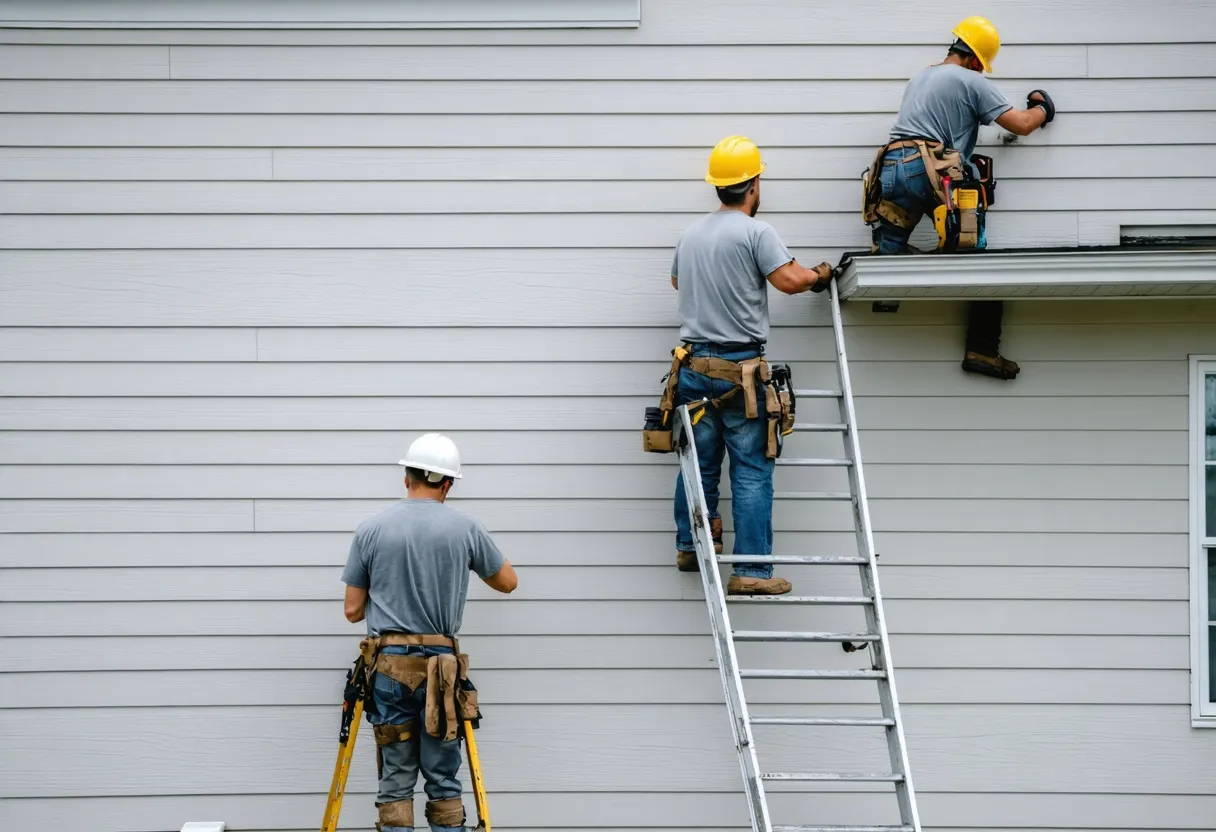
A fiber cement installer working thirty miles east of here might never think about wind uplift at a butt joint or fastener withdrawal resistance during a straight-line wind event. In Tuscaloosa County — sitting inside a recognized tornado corridor with a spring severe-weather season and a second round of storm risk that often follows the summer heat — that omission is exactly what separates a siding job that survives its first bad storm system from one that doesn't. Fiber cement siding installation in Tuscaloosa isn't just about choosing James Hardie or Cedar Ridge and nailing boards to studs; it's about a fastening schedule, a flashing detail, and a sheathing inspection that assume this county will eventually get hit with real wind.
This page focuses specifically on that wind-aware layer of the job — what changes in the specification when severe weather exposure is treated as a design input rather than an afterthought, what actually drives the line-item cost once tear-off and hidden repairs enter the picture, and what questions to ask before you sign a quote that looks identical to every other one in your inbox.
Why Tuscaloosa County's Storm Exposure Changes the Fiber Cement Spec
Two climate realities define siding performance here, and most estimates only account for one of them. The first is humidity: long stretches of sustained moisture that punish any material prone to swelling, cupping, or trapped vapor behind the cladding. The second, less discussed in a standard sales pitch, is wind exposure tied to Tuscaloosa County's position in an active severe-weather corridor — a region where straight-line wind events and tornado-adjacent storm systems are a recurring, not hypothetical, part of the spring and late-summer calendar.
Why Density Alone Doesn't Solve the Problem
Fiber cement's density gives it a real advantage over vinyl in wind and impact resistance — that part of the marketing is accurate. But density only matters if the board is actually held to the wall the way it's engineered to be. A HardiePlank or Cedar Ridge course fastened with the wrong nail depth, spaced too widely, or driven into unrepaired, softened sheathing behaves nothing like the product tested in the manufacturer's wind-load data. The material's storm performance and the installation's storm performance are two different variables, and only one of them shows up on a spec sheet.
What a Wind-Aware Spec Actually Adds
In practice, treating storm exposure as a design input changes a handful of concrete things: fastener spacing gets tightened to the manufacturer's high-wind schedule rather than the standard schedule, flashing at window and door heads gets built as a true drainage plane instead of a bead of caulk, and any furring or rainscreen gap gets installed rather than skipped, because trapped moisture behind a wind-stressed wall assembly is what turns storm exposure into rot. None of this is exotic. It's the difference between installing to the minimum that passes a quick glance and installing to what the county's permit inspection and the product's own installation guide actually require.
What Separates a Wind-Aware Fiber Cement Install From a Standard One
The Storm-Ready Installation Sequence We Follow
Every elevation gets measured and inspected for existing moisture damage, prior caulk failures, and problem trim so the wind-exposure spec is set before material is ordered, not adjusted mid-job.
Sound, flat existing siding can sometimes take furring strips and a direct install, but rot, multiple layers, or code requirements call for full tear-off — and that decision should be explained before you sign, not discovered once the crew arrives.
Housewrap or building paper is lapped from the bottom up and window and door openings are flashed with a real drainage plane, so any water that gets behind the cladding during a wind-driven rain event has somewhere to go besides the framing.
Planks are fastened at the depth and spacing specified for storm exposure, joints are staggered and sealed to spec, and every hose bib, vent, and fixture penetration is closed before the job is called finished.
James Hardie HZ5 vs. Cedar Ridge: What Actually Changes the Line-Item Cost
We're not going to hand you a made-up price range — every real fiber cement quote in Tuscaloosa depends on square footage, tear-off scope, and what's found once the old siding comes off, and any contractor who quotes a firm number over the phone before seeing your walls is skipping a step. What we can tell you plainly is what moves the number up or down, so you can read a quote instead of just trusting one.
Product Line
James Hardie's climate-engineered lines, including the HZ5 formulation built for hot, humid regions like this one, cost more than Cedar Ridge fiber cement, which is a legitimate lower-cost entry point into the same category. The gap between them is about factory finish options, warranty terms, and plank profile — not a difference in whether the board is genuinely fiber cement.
Tear-Off, Hidden Repair, and Wall Geometry
Full removal and disposal of existing siding adds labor hours a direct-application job skips. Hidden sheathing or framing rot found once the old siding is off is priced as it's discovered — which is exactly why a firm all-in number before anyone opens the wall deserves a second question. Steep rooflines, dormers, multiple stories, and heavy trim detail all add labor time relative to a simple rectangular elevation, and upgraded trim, shake accents, or board-and-batten sections cost more than standard lap siding.
What the Wind-Aware Details Add — and Why They're Worth Asking About Directly
A tightened fastening schedule, a real flashing detail at every opening, and a rainscreen gap where the product calls for one add some labor time compared to a bare-minimum install. Ask any contractor whether those items are included in the base quote or priced as an upcharge later — the answer tells you a lot about how the rest of the job will go.
Fiber Cement Installation Questions Tuscaloosa Homeowners Actually Ask
Does fiber cement siding actually hold up better in a Tuscaloosa County storm?
The material helps — density gives fiber cement better wind and impact resistance than standard vinyl — but the installation matters just as much. Tight fastener spacing, sealed joints, and real flashing are what keep a wall assembly attached and watertight when wind loads spike, not the board alone.
What's the difference between James Hardie's HZ5 line and Cedar Ridge fiber cement?
Both are genuine fiber cement products. HZ5 is James Hardie's formulation engineered specifically for hot, humid climate zones like this one. Cedar Ridge is a lower-cost fiber cement alternative with different factory finish options, warranty terms, and profile choices — it's a real second entry point into the category, not a downgrade to a different material.
Do I need a permit for fiber cement siding installation in Tuscaloosa?
Most full replacement projects require a local building permit, and fastening schedules, flashing details, and clearances are inspected items, not optional extras. A local contractor should handle that process as part of the job rather than leaving it to you.
Can fiber cement go over my existing siding, or do I need full tear-off?
Sometimes, if the existing surface is flat, sound, and free of rot, using furring strips to create the correct mounting plane. Where there's moisture damage or multiple old layers already, full tear-off is the right call — a contractor should explain which situation applies to your home before quoting.
What should I check for after a storm if my fiber cement siding looks fine?
Get it assessed even if the damage looks purely cosmetic. A cracked panel or a lifted joint can let wind-driven rain behind the wall assembly long before it's visible from the street, and catching it early is far cheaper than repairing hidden rot months later.
How long does a fiber cement installation take on an average Tuscaloosa home?
It depends on square footage, whether full tear-off is required, trim complexity, and whether hidden sheathing repairs turn up once the old siding comes off — timelines vary enough between projects that a real number should come from a walk of your specific walls.
Serving Tuscaloosa and the Rest of the County's Storm Corridor
We install fiber cement siding throughout Tuscaloosa and the surrounding communities in Tuscaloosa County, including Northport, Cottondale, and the North River area — the same wind-aware fastening and flashing details apply wherever the address falls inside the county's storm exposure. If you're just outside city limits, ask directly whether your address is covered before assuming it isn't.
Get Your Free Quote
Tell us about your home and we'll follow up with clear pricing and options.
More siding installation services
Ready to Talk Siding?
Reach out for a free, no-obligation quote on your project.